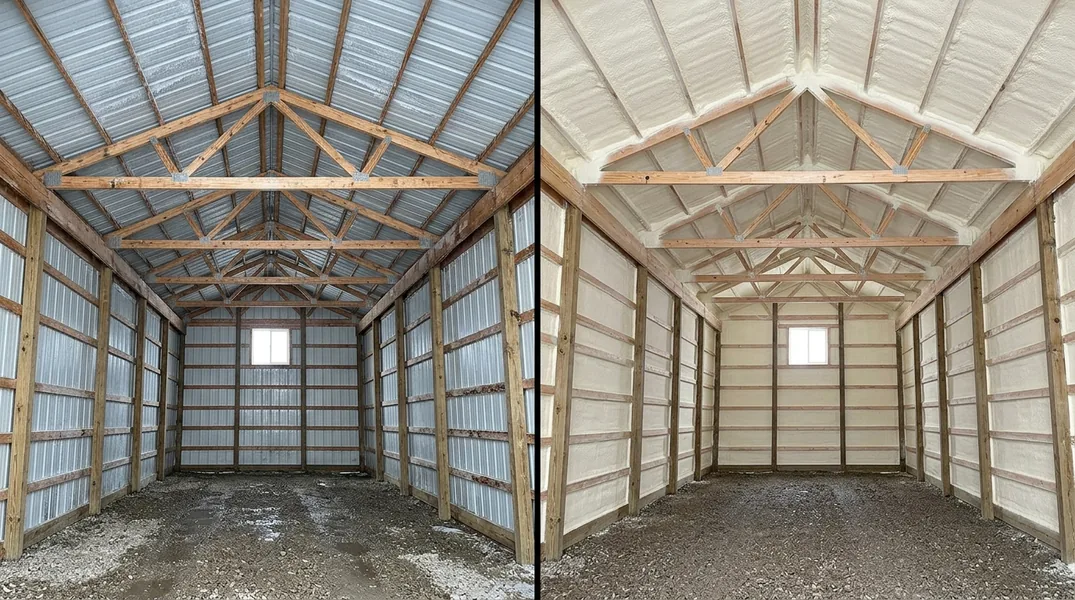
Why Marathon County Farm Buildings Need Specialized Insulation
Marathon County's agricultural operations face unique climate challenges. Dairy barns, ginseng growing facilities, and other farm structures experience dramatic temperature swings, high moisture loads, and the constant risk of frost damage. During Wisconsin winters, uninsulated or poorly insulated metal buildings can develop condensation on interior surfaces, leading to rust, mold growth, and compromised structural integrity. For ginseng growers especially, humidity control is critical; excess moisture can destroy crops and create ideal conditions for fungal diseases.
Traditional fiberglass batts and blown-in cellulose often fail in these environments because they absorb moisture and lose their thermal resistance when wet. Closed Cell Spray Foam Insulation offers a fundamentally different approach. Unlike conventional materials, spray foam creates an air-tight seal that prevents warm, moist air from reaching cold metal surfaces where condensation forms. This moisture barrier is essential for protecting both the building envelope and the valuable crops or livestock inside.
Metal Building Insulation Solutions for Dairy Operations
Dairy barns in Wausau and surrounding areas generate significant heat and moisture from animal respiration, manure management, and cleaning operations. When this warm, humid air contacts cold metal walls and roofing in winter, condensation drips onto equipment, feed storage, and animal areas. This moisture promotes rust on metal surfaces, accelerates structural corrosion, and creates slippery, unsanitary conditions. The problem worsens in older pole barns and metal-clad structures that lack proper ventilation or insulation.
The best insulation for metal buildings in dairy operations combines thermal resistance with vapor impermeability. Closed Cell Spray Foam Insulation achieves both. When applied to the interior of metal roof decking and walls, it forms a continuous thermal and moisture barrier. The foam's closed-cell structure (typically R-6 to R-7 per inch) stops heat loss while its impermeability prevents humid interior air from reaching the cold metal substrate. This eliminates the temperature differential that causes condensation, protecting your dairy investment and improving animal comfort and milk quality.
Pole Barn Insulation for Ginseng and Specialty Crops
Ginseng cultivation in Marathon County requires precise environmental control. The crop demands shade, consistent moisture levels, and protection from temperature extremes. Many growers use pole barns or converted agricultural buildings as shade houses or storage facilities. Standard pole barn insulation like fiberglass batts or loose-fill materials cannot maintain the humidity and temperature stability that ginseng demands. When moisture-laden air leaks through poorly insulated walls, it creates hot spots where condensation forms, leading to mold and crop loss.
Pole barn insulation using spray foam addresses these challenges directly. Closed Cell Spray Foam Insulation applied to the interior of pole barn walls and roof creates an airtight envelope that maintains stable internal conditions. For ginseng operations, this means consistent relative humidity, reduced temperature swings, and no condensation dripping onto plants or stored roots. The foam also provides structural reinforcement to older pole barns, improving their durability and resale value. Unlike fiberglass, spray foam won't sag, settle, or absorb the moisture that ginseng cultivation naturally produces.
Steel Building Insulation and Frost Prevention in Winter
Steel buildings are popular in Marathon County because they offer clear span interiors and quick construction. However, steel conducts heat rapidly and lacks inherent insulation value. In winter, a steel-framed structure with inadequate insulation becomes a thermal liability. The metal frame and cladding act as a cold bridge, drawing heat from the interior and creating conditions where frost accumulates on interior surfaces. For agricultural operations storing grain, equipment, or crops, this frost can damage products and create hazardous working conditions.
Steel building insulation with spray foam prevents frost formation by maintaining warm interior surface temperatures. When Closed Cell Spray Foam Insulation is applied to the underside of metal roof decking and to wall cavities, it breaks the thermal bridge created by the steel frame. The foam's high R-value and air-sealing properties mean that interior air (even if humid) never reaches the dew point at the metal surface. Result: no frost, no condensation, and a protected building interior. This approach also reduces heating costs significantly, often paying for itself within a few years through energy savings.
Barndominium Insulation: Comfort and Code Compliance
The barndominium trend has brought residential living spaces into agricultural buildings across Marathon County. Converting a barn or metal structure into a home requires insulation that meets building codes and provides year-round comfort. Barndominiums present a dual challenge: they must maintain residential comfort standards while managing the moisture and thermal dynamics of a farm environment. Standard attic insulation or fiberglass wall batts often prove inadequate because they don't address air infiltration or the unique moisture loads of a building that may house livestock, equipment, or agricultural products in other sections.
Attic Spray Foam Insulation and wall applications with closed-cell foam create a fully conditioned, code-compliant living space within a barndominium. The foam seals air leaks, eliminates cold spots, and prevents condensation from compromising the living area. For homeowners planning a barndominium conversion in Wausau, spray foam insulation is often the most effective way to achieve thermal comfort, moisture control, and energy efficiency while maintaining the building's agricultural character.
Getting a Free Estimate for Your Farm Building
If you operate a dairy, ginseng farm, or other agricultural building in Marathon County, condensation and frost damage are costing you money and risk. The solution starts with a professional assessment of your current insulation and building envelope. Wausau Spray Foam Insulation specializes in metal building insulation, pole barn insulation, and steel building solutions tailored to agricultural operations. Our team understands the specific challenges of Wausau-area farms and can recommend the best insulation for metal buildings, barndominiums, and specialty structures.
Contact Wausau Spray Foam Insulation today at (534) 901-1691 or request a free estimate to learn how spray foam can protect your investment, improve operational efficiency, and eliminate frost and condensation problems. We'll assess your building, discuss your specific needs, and provide a clear plan for insulation that works year-round in Marathon County's demanding climate.
Looking for a professional spray foam insulation contractor in Wausau? Wausau Spray Foam Insulation responds fast for all your spray foam insulation needs.
Get a Free Quote