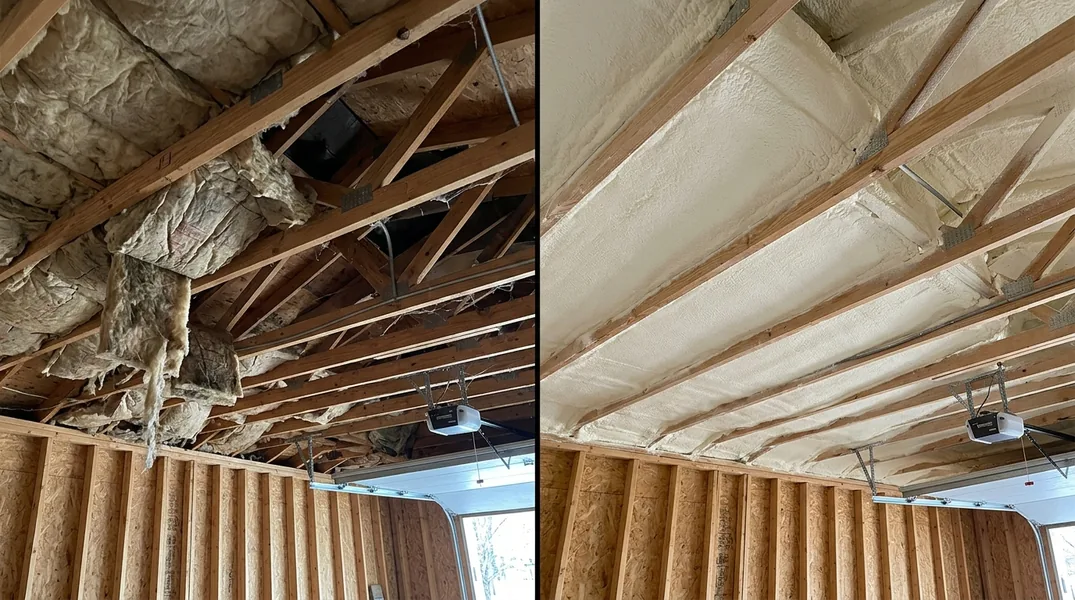
Understanding the Basics: Open-Cell vs Closed-Cell Spray Foam
When you're researching Attic Spray Foam Insulation for your home in Wausau, you'll quickly encounter two main types: open-cell and closed-cell spray foam. Both are excellent insulators, but they work differently and offer distinct advantages depending on your specific needs. Understanding these differences is the first step toward making an informed decision for your home.
Open-cell spray foam has a structure where the cells are not completely enclosed. Think of it like a sponge with interconnected pores that allow air and moisture to pass through. This characteristic makes it softer, more flexible, and generally less expensive than its counterpart. Closed-cell spray foam, by contrast, has cells that are tightly sealed and packed together, creating a denser, more rigid material that resists moisture and air infiltration. This fundamental structural difference drives everything else you need to know about performance, cost, and application.
Open-Cell Spray Foam: Benefits and Limitations
Open Cell Spray Foam Insulation has become increasingly popular for homeowners seeking a cost-effective insulation solution. One of its primary advantages is affordability. Open-cell foam typically costs less per board foot than closed-cell alternatives, making it an attractive option if you're working within a budget. Additionally, open-cell foam is an excellent sound dampener, which means it can help reduce noise transmission between rooms and from outside sources. This makes it particularly valuable if you live in a busier area or want to improve the acoustic quality of your home.
However, open-cell foam does have limitations you should consider. Because the cell structure is open, it absorbs moisture readily. This means it's not ideal for areas that experience high humidity or potential water exposure, such as crawl spaces or below-grade applications. In Wausau, where winters are cold and moisture can be a concern, this is an important factor. Open-cell foam also has a lower spray foam R value, typically ranging from 3.5 to 3.6 per inch, which means you'll need a thicker layer to achieve the same insulation value as closed-cell alternatives. The material is also more permeable to air, so it requires a proper air barrier to function optimally in your attic.
Closed-Cell Spray Foam: Superior Performance and Higher R-Value
Closed Cell Spray Foam Insulation is the premium choice for homeowners who want maximum performance. The most significant advantage is its impressive closed cell spray foam r value, which ranges from 6.0 to 7.0 per inch. This means closed-cell foam delivers nearly double the insulation value of open-cell foam in the same thickness. For attic applications, this translates to superior energy efficiency and lower heating and cooling costs over the lifetime of your home. The denser structure also makes closed-cell foam more structurally rigid, which can actually add strength to your attic framing and roof assembly.
Another major benefit of closed-cell foam is its moisture resistance. Because the cells are sealed, water cannot penetrate the material, making it ideal for areas prone to moisture exposure. In Wisconsin's climate, this is particularly valuable for protecting your home from ice dams, roof leaks, and humidity problems. Closed-cell foam also acts as an excellent air barrier, virtually eliminating air leakage when properly installed. This combination of high spray foam r value, moisture resistance, and air sealing capability makes closed-cell foam the preferred choice for attic insulation in climates like ours. The trade-off is cost. Closed-cell foam typically costs more than open-cell alternatives, but many homeowners find the long-term energy savings and superior performance justify the investment.
Spray Foam R-Value: What You Really Need to Know
The R-value is one of the most important metrics when comparing insulation products. It measures thermal resistance, or how well a material resists heat flow. Higher R-values mean better insulation performance. When comparing open-cell versus closed-cell spray foam, the R-value difference is dramatic. Open-cell foam delivers approximately 3.5 to 3.6 R-value per inch, while closed-cell foam provides 6.0 to 7.0 R-value per inch. This means if you want to achieve an R-value of 30 in your attic using open-cell foam, you'd need roughly 8 to 9 inches of material. With closed-cell foam, you'd need only 4 to 5 inches to reach the same performance level.
For homeowners in Wausau, understanding local building codes and energy requirements is essential. Wisconsin's climate demands robust insulation to maintain comfortable indoor temperatures during harsh winters and hot summers. The U.S. Department of Energy recommends attic insulation levels between R-38 and R-60 depending on your climate zone, and Wisconsin typically falls in the higher range. A qualified contractor can assess your current insulation and recommend the appropriate thickness and type for your specific situation. The choice between open-cell and closed-cell often comes down to balancing your budget against long-term energy savings and your home's specific vulnerabilities to moisture.
Attic Spray Foam Insulation Cost in Wausau: What to Budget
Cost is a realistic consideration when planning any home improvement project. Open-cell spray foam typically costs between $0.50 and $1.00 per board foot installed, while closed-cell spray foam ranges from $1.50 to $2.50 per board foot or higher. For a typical attic project, these costs can add up quickly, but it's important to view this as an investment rather than an expense. The energy savings from proper attic insulation can reduce your heating and cooling costs by 15 to 20 percent annually, which means the insulation often pays for itself within 5 to 10 years.
When evaluating pricing for your attic project, request a detailed free estimate from a reputable local contractor. Wausau Spray Foam Insulation can provide a comprehensive assessment of your attic's current condition, calculate the required insulation thickness, and give you accurate pricing for both open-cell and closed-cell options. This allows you to make a truly informed decision based on your budget, timeline, and long-term goals. Don't automatically choose the cheapest option. Consider the durability, performance, and potential energy savings of each type. Many homeowners find that the slightly higher upfront cost of closed-cell foam delivers better value over the long term.
Which Type Is Right for Your Wausau Home?
Choosing between open-cell and closed-cell spray foam depends on several factors specific to your home and situation. If moisture is a concern, if you want maximum insulation value in minimal thickness, or if you're willing to invest in premium performance, closed-cell foam is the superior choice. It's particularly recommended for attics in Wisconsin homes that have experienced moisture problems, ice dam issues, or existing roof leaks. The moisture resistance and higher R-value make it the safest long-term investment for protecting your home from weather-related damage.
Open-cell foam makes sense if you're working with a limited budget, want excellent sound dampening, and your attic is dry and well-protected from moisture exposure. It still provides solid insulation performance and can significantly improve your home's energy efficiency compared to traditional fiberglass or cellulose insulation. However, in Wausau's climate, closed-cell foam is generally the more practical choice for most homeowners. The best way to make your decision is to consult with experienced professionals who understand local building conditions and can assess your specific attic situation. Contact Wausau Spray Foam Insulation at (534) 901-1691 to schedule a consultation and get personalized recommendations based on your home's unique needs.
Looking for a professional spray foam insulation contractor in Wausau? Wausau Spray Foam Insulation responds fast for all your spray foam insulation needs.
Get a Free Quote