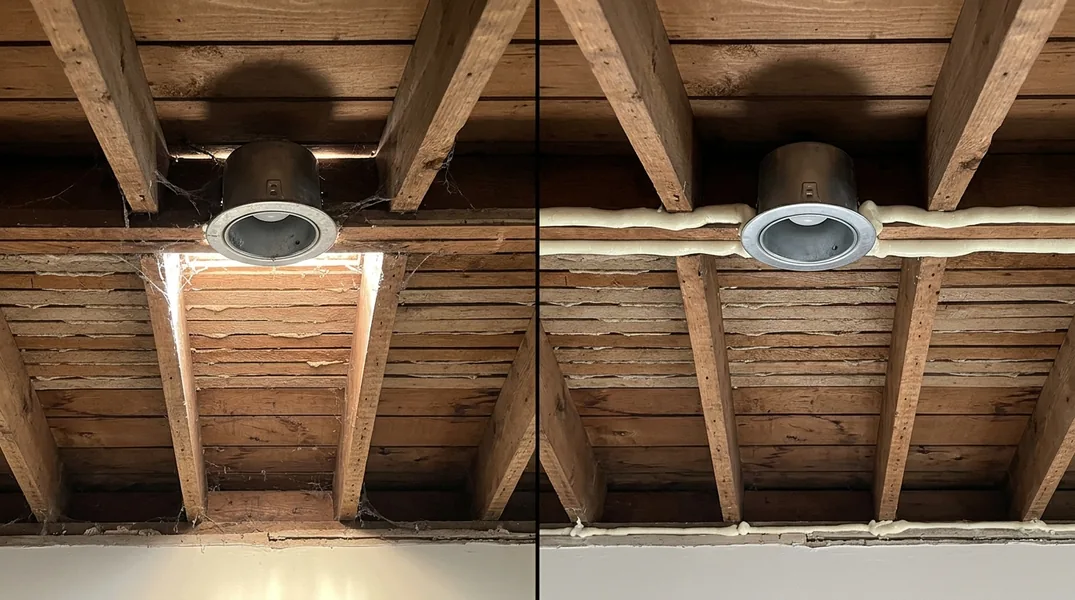
Spray Foam vs Blown-In Insulation: The Real Difference
When homeowners in Wausau start researching the best insulation for attic upgrades, they quickly encounter two major options: spray foam and blown-in insulation. Both have legitimate strengths, and understanding how they actually differ is the first step toward making a decision that fits your home and budget.
Attic Spray Foam Insulation comes in two primary types: closed-cell and open-cell. Closed-cell spray foam is dense, offers superior R-value per inch, and creates an air-tight seal that also acts as a vapor barrier. Open-cell foam is lighter, less expensive, and still provides excellent air sealing but with a lower R-value per inch. Blown-in insulation, by contrast, typically consists of cellulose, fiberglass, or mineral wool that is pneumatically sprayed into cavities. It settles over time and does not create an air-tight seal on its own, though it remains a reliable thermal barrier when properly installed.
Spray Foam vs Fiberglass: Which One Seals Better
One of the clearest distinctions between spray foam vs fiberglass comes down to air sealing. Spray foam expands as it cures, filling every gap, crack, and void in your attic. This means it addresses both thermal resistance and air leakage in a single application. Fiberglass blown-in insulation, while an effective thermal insulator, leaves small gaps and voids unfilled unless you use a separate air barrier like drywall or house wrap underneath.
In the cold winters of Wausau, air leakage can account for significant energy losses. Spray foam eliminates this problem directly. However, fiberglass blown-in insulation costs less upfront and performs adequately if your attic is already well-sealed at the rim joists and penetrations. The choice depends on whether you prioritize maximum efficiency and longevity or lower initial cost.
Spray Foam vs Cellulose: Settling, Moisture, and Performance Over Time
Homeowners often ask about spray foam vs cellulose when comparing long-term value. Cellulose is made from recycled paper and offers decent R-value (around 3.2 to 3.8 per inch). It is eco-friendly and relatively inexpensive. However, cellulose settles over time, meaning your effective R-value decreases after a few years. It is also more susceptible to moisture absorption, which can lead to mold growth and structural concerns in humid climates or homes with moisture issues.
Spray foam, especially Closed Cell Spray Foam Insulation, maintains its R-value indefinitely and resists moisture intrusion. It does not settle or degrade. In a climate like Wausau's, where seasonal moisture swings are common, this stability can justify the higher upfront cost over a 20 to 30 year lifespan.
When a Top-Up Is the Honest Answer
Here is where Wausau Spray Foam Insulation wants to be completely transparent with you. Not every attic needs a complete insulation replacement. If you already have fiberglass batts or blown-in insulation that is in good condition and at a reasonable depth, adding a top-up layer of blown-in insulation over it is often the most cost-effective solution. This approach improves your R-value without the expense of removing and replacing everything.
A top-up makes sense if your current insulation is between R-19 and R-30 and you want to reach modern standards of R-38 to R-60 (depending on your roof assembly and local energy codes). Blown-in insulation is ideal for this because it conforms to existing framing and equipment without requiring the removal of old material. You gain meaningful energy savings at a fraction of the cost of a full spray foam retrofit.
Where spray foam shines is when your attic has air leakage problems, moisture concerns, or when you are building new or doing a complete renovation. The air-sealing capability and long-term durability of spray foam justify its higher pricing in these scenarios. But if your foundation is solid, a smart top-up may be the right move for your home and wallet.
Attic Spray Foam Insulation Cost in Wausau: What to Budget
Cost is often the deciding factor. Attic Spray Foam Insulation typically runs between $1.50 and $3.00 per board foot, depending on whether you choose open-cell or closed-cell foam. A typical 1,500 square foot attic might cost $3,000 to $6,000 or more for full spray foam coverage. Blown-in insulation top-ups, by contrast, usually cost $0.50 to $1.50 per square foot, making a similar project run $750 to $2,250.
The difference is significant, and it is why an honest contractor will ask about your current insulation depth, condition, and energy goals before recommending a solution. If you have existing insulation and simply need to reach code, blown-in is often the smart play. If you have moisture, air leakage, or are starting from scratch, spray foam delivers better long-term value despite higher upfront costs. The best way to know which makes sense for your home is to get a free estimate from a local professional who will assess your specific situation.
Making Your Decision: Questions to Ask Before You Commit
Before choosing between spray foam and blown-in insulation, ask yourself these questions. First, what is your current insulation type and depth? Second, are you experiencing air leakage, drafts, or moisture issues in your attic? Third, do you plan to stay in your home for at least 10 years? Fourth, is your budget flexible, or are you working within strict limits? And fifth, are there any building code or energy efficiency goals you want to meet?
If your current insulation is performing adequately and you simply want to boost R-value cost-effectively, a blown-in top-up is often the honest, practical answer. If you are dealing with air sealing problems, planning a major renovation, or want maximum long-term durability, Open Cell Spray Foam Insulation or closed-cell options deserve serious consideration. Wausau Spray Foam Insulation believes in recommending what actually makes sense for your home, not just the most expensive option. Call us at (534) 901-1691 or visit our website to discuss your attic and get honest guidance tailored to your needs.
Looking for a professional spray foam insulation contractor in Wausau? Wausau Spray Foam Insulation responds fast for all your spray foam insulation needs.
Get a Free Quote